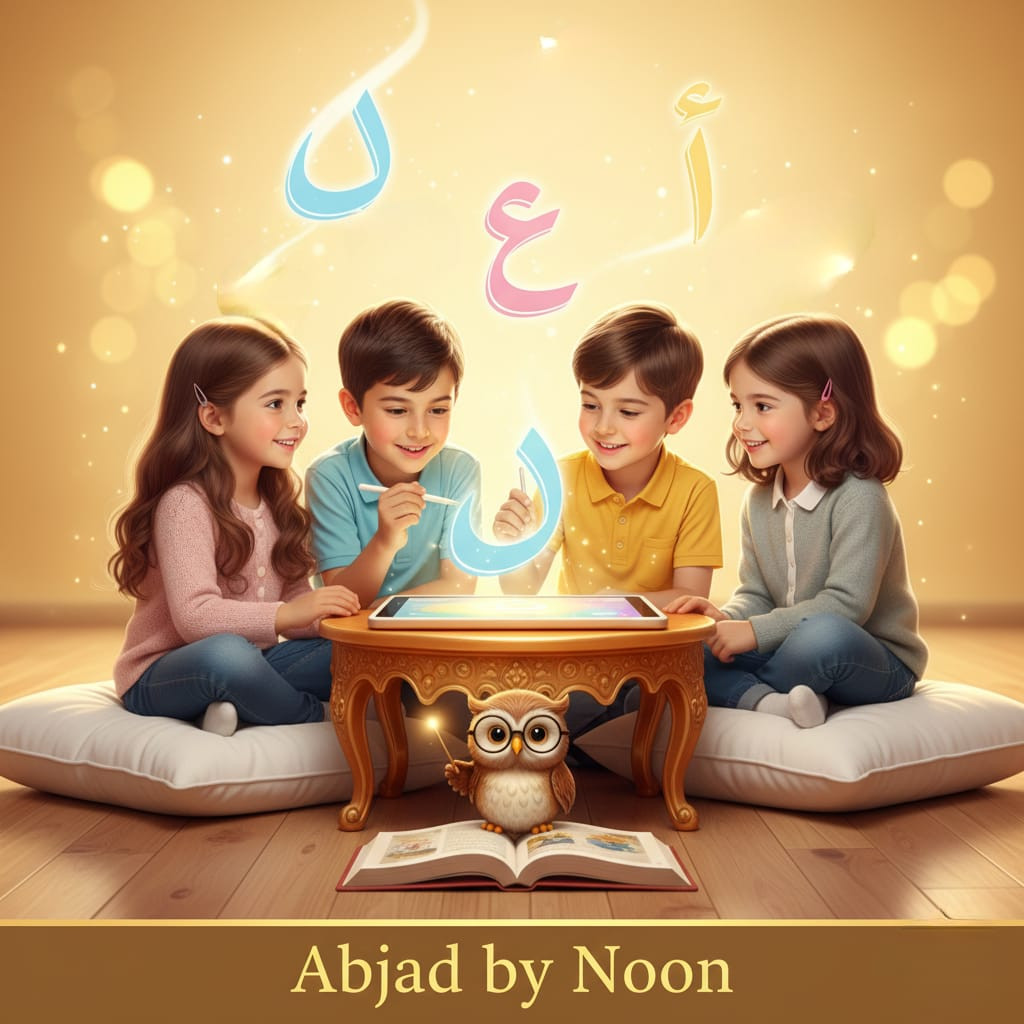
Course Description
Noon Arabic Alphabet course is designed for learners with no prior knowledge of the Arabic language. This is a beginner's Arabic language course. This course provides an introduction to Arabic phonetics and script. The pronunciation and writing of each letter is taught individually and in the context of simple words and sentences.
This course requires 120 hours to complete.
Course Learning Outcomes
Upon completion of Abjad course, students will be able to:
- Distinguish between spoken and written Arabic letters.
- Distinguish the shape of a letter when it appears at the beginning, middle, or end of a word.
- Read short and long words and sentences.
- Write letters, words and sentences correctly.
- Learn some vocabulary and dialogs related to everyday life.
Knowledge
This beginner's Arabic course covers the following knowledge areas:
- Alphabets
- Reading
- Writing
Assessment Overview
The following are the course assessment criteria components:
- Online Activities (60%)
- Writing Assignments (20%)
- Quizs (20%)
- Teacher: Hadeel Saleh
120 hours

Course Description
This course is designed to strengthen learners’ Arabic skills by integrating Qur’anic texts as primary sources of study. It focuses on the meanings of key religious vocabulary, the linguistic aspects of Qur’anic rulings, and the structures of sentences and pronouns. Special attention is given to the differences between Modern Standard Arabic and Qur’anic Arabic. The course combines linguistic and religious understanding, enabling students to read and analyze Qur’anic texts with clarity and accuracy.
Duration
120 hours
Learning Outcomes
By the end of this course, students will be able to:
- Understand the meanings of essential Qur’anic religious vocabulary.
- Grasp the linguistic context of rulings derived from Qur’anic texts.
- Differentiate between sentence structures and pronoun usage in Standard Arabic and Qur’anic Arabic.
- Analyze selected Qur’anic texts from a simplified linguistic perspective.
Areas of Knowledge
The course will cover the following topics:
- Qur’anic vocabulary and its meanings.
- Linguistic and religious implications of Qur’anic rulings.
- Sentence structures in the Qur’an: nominal and verbal sentences.
- Pronouns in Qur’anic texts and their functions.
- Differences between Modern Standard Arabic and the Qur’anic Arabic.
- Applied studies of selected short and medium-length Surahs.
Assessment Overview
The course assessment consists of:
- Qur’anic text analysis activities: 60%
- Writing and linguistic assignments: 20%
- Written and oral exams: 20%
- Teacher: Hadeel Saleh
150 hours
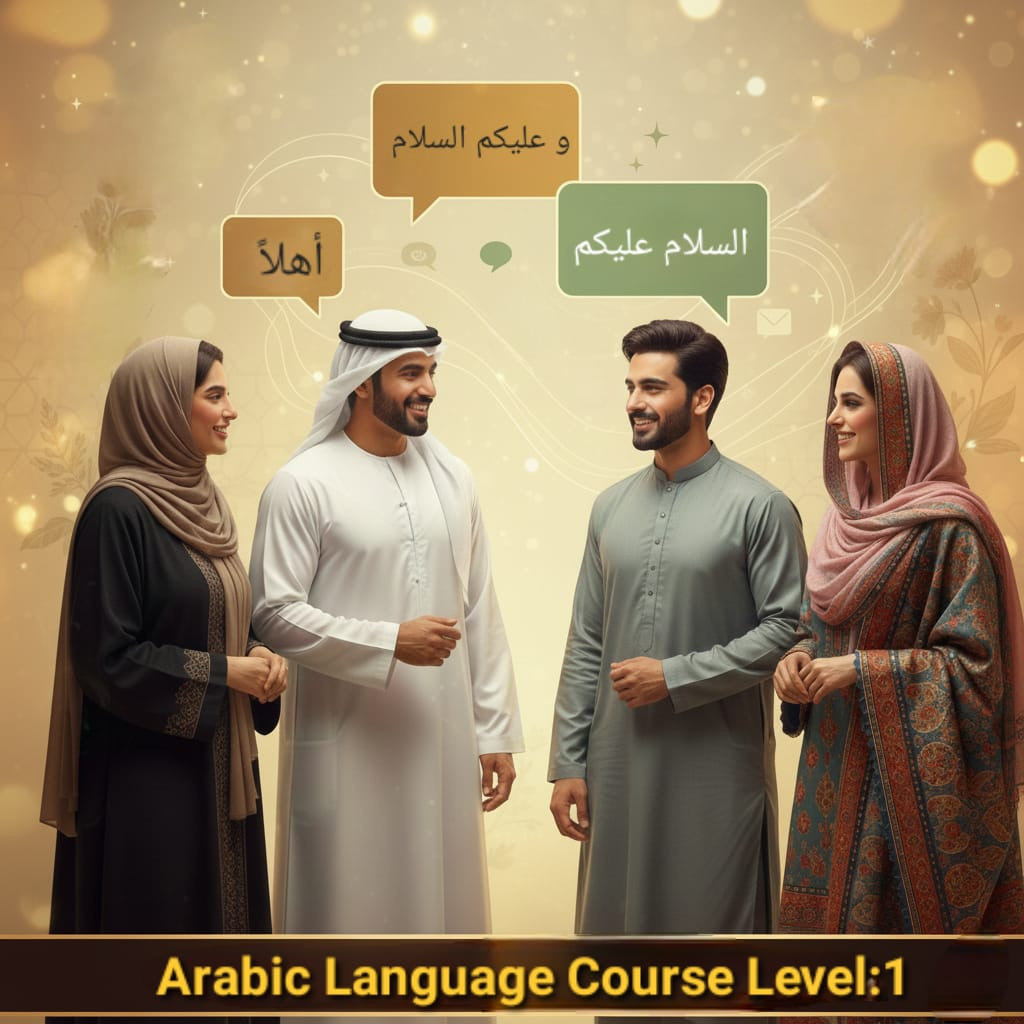
Course Description
This course is designed for learners who are familiar with the Arabic alphabet but have little to no prior knowledge of the language. It focuses on real-life situations that students are likely to encounter in their daily lives. By the end of the course, learners will be able to interact with native speakers in a variety of everyday contexts, such as ordering food, discussing daily routines, asking for and giving directions, shopping, and inquiring about prices. Additionally, students will gain an introductory understanding of the fundamental structures of Modern Standard Arabic.
Suitable for foreign residents in Arab countries and students of Arabic literature and languages
Course Duration
The course requires a total of 120 hours for completion
Learning Outcomes
Upon successful completion of this course, students will be able to
- Initiate and respond to social interactions in simple, everyday situations
- Introduce themselves by talking about their names, professions, and friends
- Describe people by discussing their appearance and emotions
- Exchange basic information with strangers in familiar contexts
- Compose simple sentences about their personal background and interests
- Ask and answer basic questions related to daily activities, routines, and needs
- Recognize and use high-frequency vocabulary related to family, work, and social life
- Demonstrate awareness of cultural norms in Arab societies when engaging in conversations
Knowledge Areas
This course addresses the following themes:
- Self and family
- Customs and traditions
- Socialization practices
- Marital traditions
- Patterns of social interaction
Assessment Overview
Evaluation will be based on the following components:
- Online activities (60%)
- Writing assignments (20%)
- Tests (20%)
- Teacher: Hadeel Saleh
90 hours